I work at the boundary between intelligent software and the systems that make it practical, with particular emphasis on:
Systems for AI: efficient, reliable runtimes for agentic and generative workloads
Heterogeneous Edge AI: correctness-aware placement across CPUs, iGPUs, and NPUs
Compiler and Runtime Optimization: reducing compilation, memory, and state-migration costs
Program Analysis and Systems Security: turning software fixes into reusable bug detectors
Research Experience
My current work spans edge AI systems and automated systems-security analysis. Representative projects are
highlighted; see also my
Google Scholar profile.
Developed a JIT NPU runtime that overlaps CPU graph compilation with NPU inference and grows the KV cache with context: 91.98% less foreground compilation time and 33.05% lower average KV memory, while preserving model quality and decoding. Cached sorted compiler dependency vectors to reduce CPU sorting time by 94.2%, and built CPU/GPU/NPU benchmarks to guide device placement.
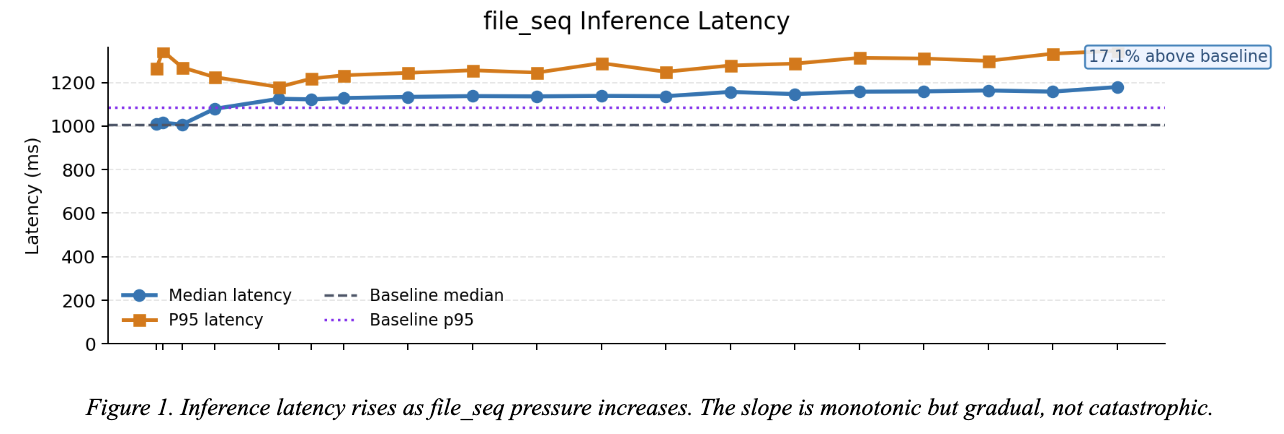
Measured how background filesystem reads interfere with a fixed LLM inference workload: median latency increased 17.1%. Windows PerfMon showed stable working sets and page-fault counts plateauing near 29.5K, supporting shared-resource contention as the explanation rather than working-set thrashing.
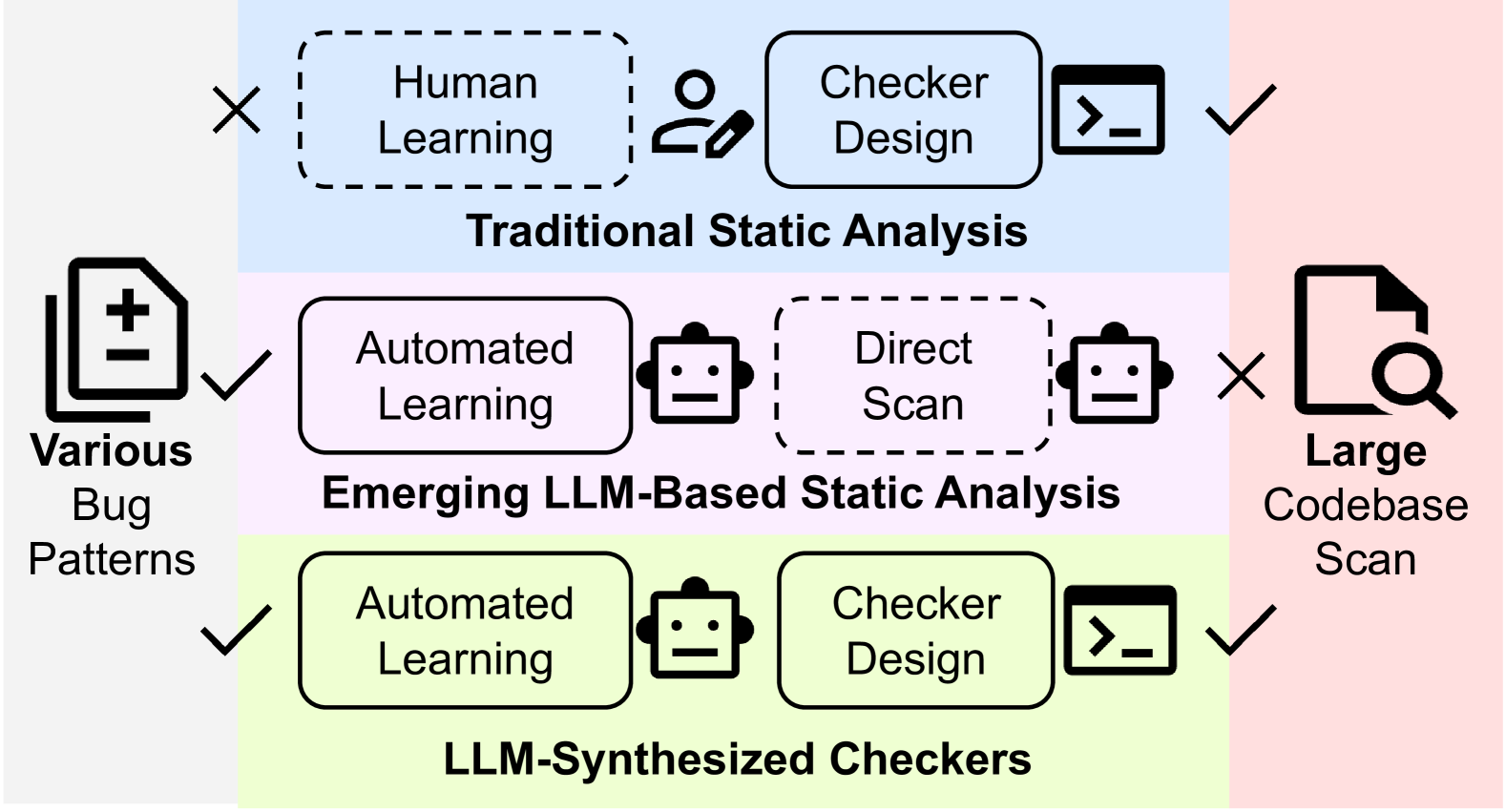
Built an LLM-driven pipeline over 50K+ Linux kernel commits to generate Clang-Tidy analyzers. Clustering and compiler-feedback repair produced 4× more valid checkers at 73% precision. A full-kernel validation harness uncovered 43 long-latent bugs with an average age of 4.7 years.
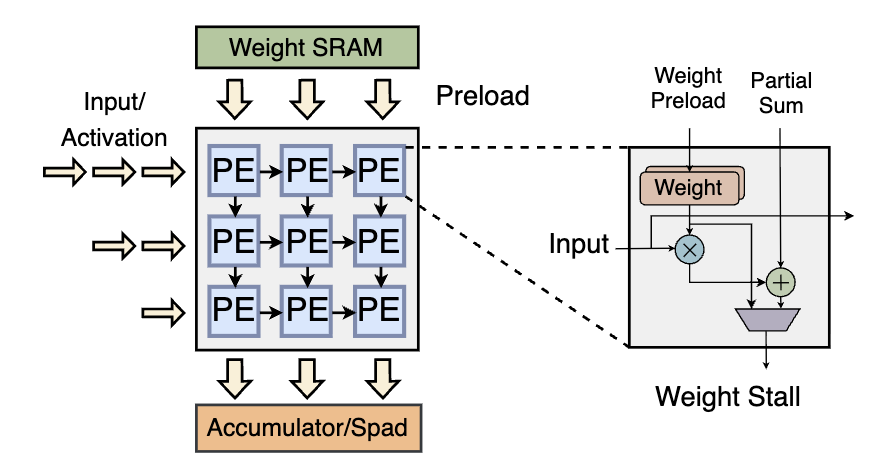
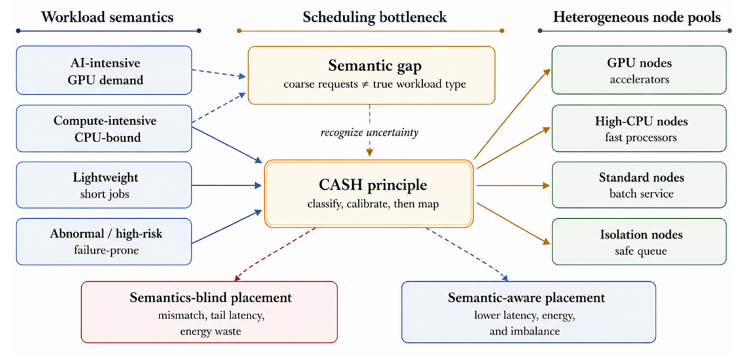
Contributed to experimental validation and performance analysis of CASH, which predicts workload–hardware affinity for CPU/GPU placement. In 5,000-task simulations using MIT Supercloud traces, the scheduler achieved 97.1% resource-matching accuracy, 46.5% lower response time, and 36.8% lower modeled energy than Meta-RHDC.
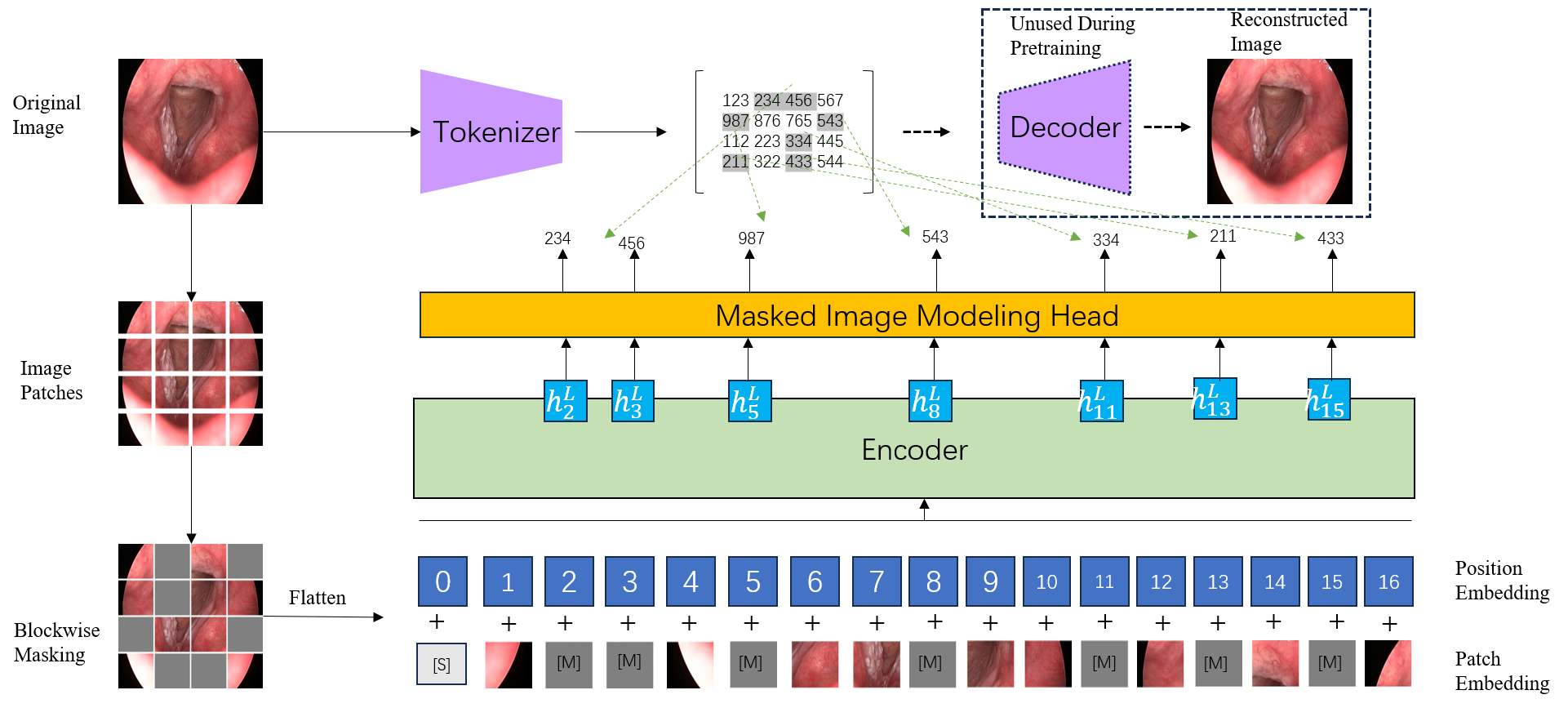
Coauthored a study using BEIT-style masked image pretraining to learn from unlabeled laryngoscopic images before fine-tuning for disease classification. The paper reports 93.33% accuracy on a three-class task using a ViT-Tiny backbone with 5.06 million parameters.
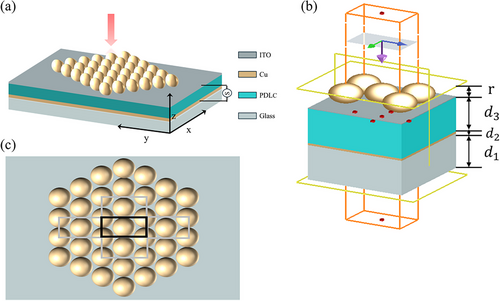
Coauthored a study of a voltage-tunable near-infrared filter combining polymer-dispersed liquid crystals with a Fabry–Perot cavity. The paper reports a tuning range of 913–969 nm and 99% transmittance at 927 nm, with a 24 nm full width at half maximum.
@article{cash2026,
  title = {CASH: Confidence-Calibrated Deep Feature Crossing for Classification-Aware Heterogeneous Task Scheduling},
  author = {Chuanlin Jian and Yuanchen Sun and Xiangcheng Liu and Xuming Huang and Samaneh Beheshti Kashi and Xing Hu},
  journal = {Computers, Materials \& Continua},
  volume = {89},
  number = {2},
  pages = {29},
  year = {2026},
  doi = {10.32604/cmc.2026.086441}
}
@inproceedings{beit2025,
  title = {A Method for Laryngoscopic Image Classification: Leveraging Self-supervised BEIT-style Pretraining},
  author = {Jie Kong and Haotian Wu and Xuming Huang and Liangjie Wu and Xing Hu},
  booktitle = {2025 7th International Conference on Frontier Technologies of Information and Computer (ICFTIC)},
  pages = {701--706},
  year = {2025},
  doi = {10.1109/ICFTIC68075.2025.11324910}
}
@article{filter2025,
  title = {Near-infrared tuneable filter based on polymer dispersed liquid crystals},
  author = {Ruimei Zeng and Rongbo Bi and Junyang Zhu and Xuming Huang and Qi Wang},
  journal = {Micro \& Nano Letters},
  volume = {20},
  number = {1},
  pages = {e70007},
  year = {2025},
  doi = {10.1049/mna2.70007}
}